
Waste Management
Every vehicle contains dozens of hazardous substances that must be properly disposed of, posing a significant waste management challenge. The hazardous components that must be extracted from a vehicle are prescribed by the Ordinance on End-of-Life Vehicle Management (Official Gazette Nos. 178/04 and 111/06), which outlines the key requirements.
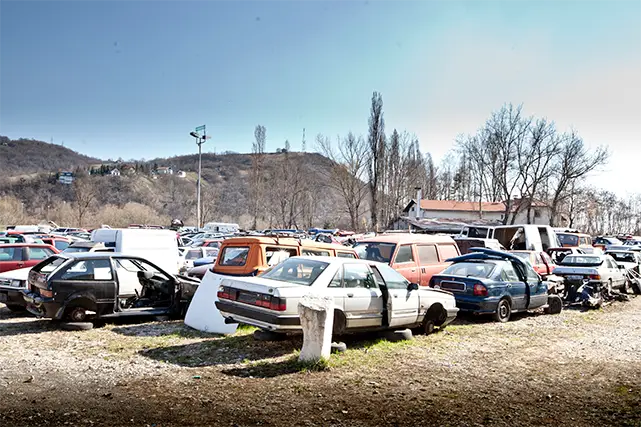
In accordance with the Ordinance on End-of-Life Vehicle Management:
(1)What are the obligations of an Authorised Treatment Facility (ATF) upon receiving an End-of-Life Vehicle (ELV)?
Upon receiving an end-of-life vehicle (ELV), the Authorised Treatment Facility (ATF) must immediately remove the battery and extract or neutralise all potentially explosive components, including liquefied petroleum gas (LPG) tanks if fitted.
"(2) The following must be extracted and collected separately from the end-of-life vehicle:
- Engine oil
- Transmission oil
- Gearbox oil
- Differential oil
- Hydraulic oil
- fuel (including liquefied petroleum gas)
- refrigerant fluid
- Brake fluid
- Shock absorber oil
- Air conditioning refrigerant (CFCs)
- Mercury-containing components
- substances, materials and components
asbestos-containing components (NN 178/04,111/06)
As Auto – Tomi is the only authorised vehicle breaker and scrap car buyer in the western part of the city, it also manages the recovery of all vehicles. End-of-life vehicles contain hazardous substances that must be disposed of properly. By entering into an agreement with CIAK d.o.o., we have enabled the temporary storage of hazardous waste prior to its transfer for recycling to the authorised disposal specialist, CIAK d.o.o..
.

In accordance with the agreement with CIAK, Auto–Tomi has purchased and installed specialised containers for the temporary storage of hazardous waste. Each container is assigned its own catalogue number and waste classification code, depending on the type of waste it holds. Currently, Auto–Tomi possesses oil storage containers categorised as 13 01 09* and 13 01 10*, a battery storage container categorised as 16 06 01*, as well as dedicated storage for glass, plastic, antifreeze, refrigerant oil, and brake fluid.
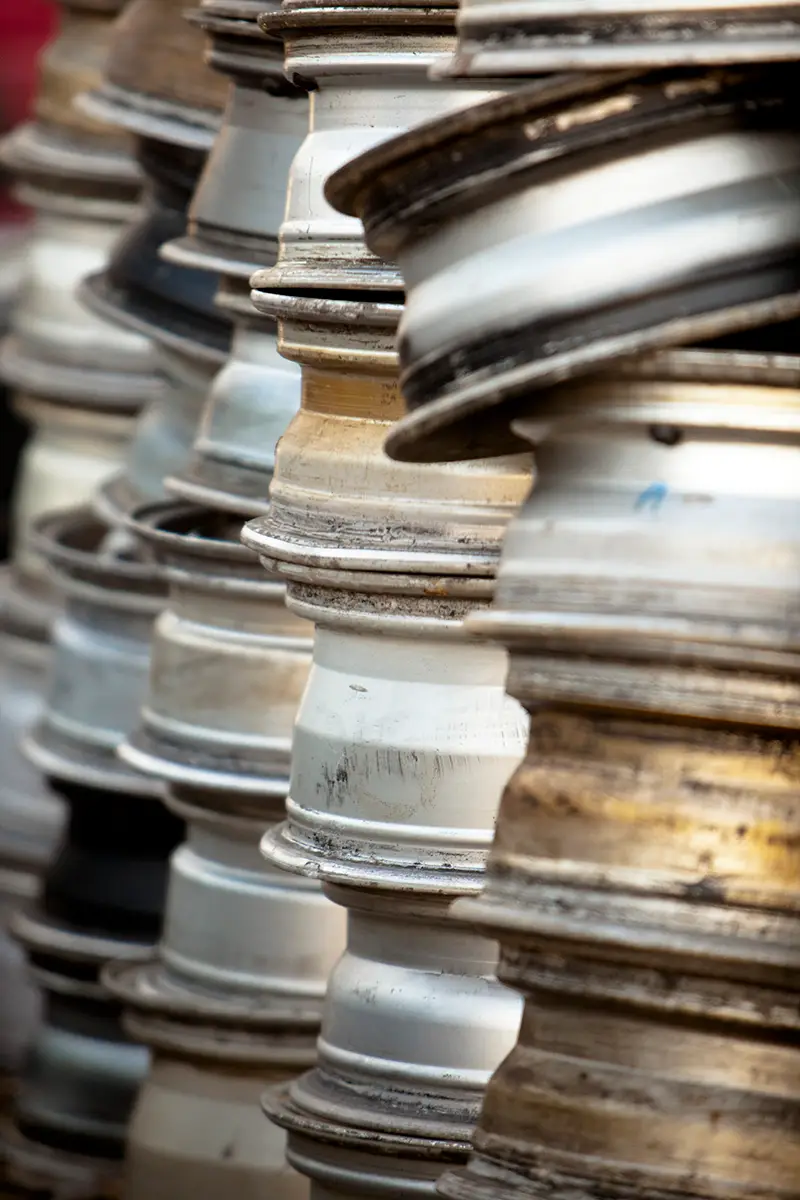

Today, there is a strong global focus on environmental protection and the recycling of raw materials in order to reduce the amount of waste. Auto-Tomi is developing in line with EU recycling trends and represents a reliable source of high-quality secondary recycled materials. According to the European End-of-Life Vehicles Directive 2000/53/EC, since 2015 at least 95% of every vehicle must be recycled. As natural mineral resources and energy sources continue to decline, it is becoming increasingly important to raise environmental awareness and recognise the value of recycled materials as a key part of the future. Recycling centres are among the primary sources of secondary raw materials. By handing over your vehicle for recycling, you contribute to the preservation of natural resources, help protect the environment, and can also earn additional income. When selling a used vehicle that is no longer suitable for use, it is important to ensure that it is delivered to an authorised company that will properly dispose of hazardous waste contained within the vehicle in accordance with environmental regulations.
Total Weight of Raw Materials Delivered (2014–2024) in kg.
- Total (2014): 7,740.00 kg
- Total 2015 92,920.00 kg
- Total 2016 181,240.00 kg
- Total 2017 167.020,00 kg
- Total 2018 239.540,00 kg
- Total 2019 224.025,00 kg
- Total 2020 331.065,00 kg
- Total 2021 350.460,00 kg
- Total 2022 424.065,00 kg
- Total 2023 460.154,00 kg
- Total 2024 551.915,00 kg
- Total 2024 598.761,00 kg